Sunday, March 26, 2017

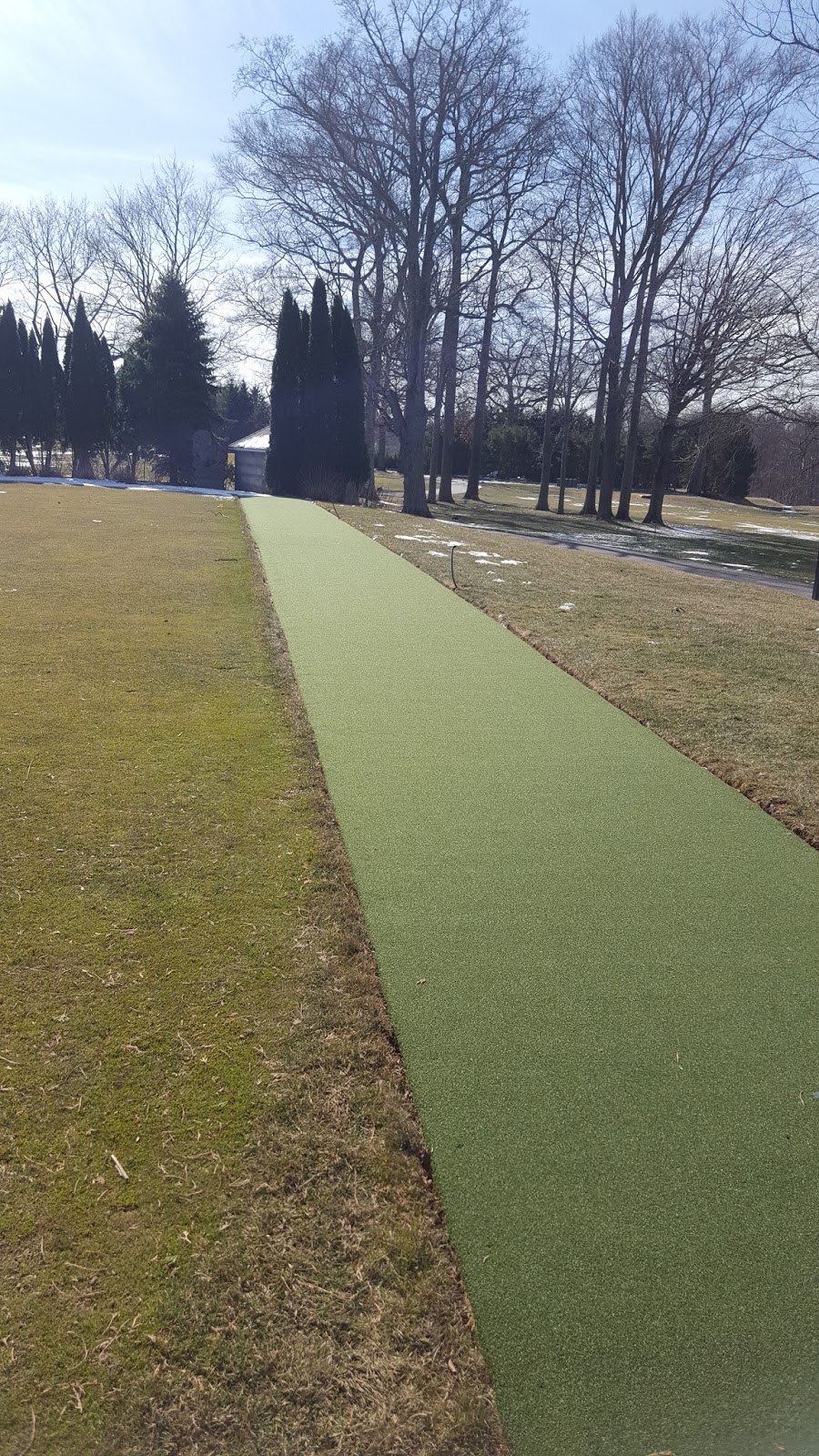
Driving Range Tee improvements

A new driving range mat system was installed over the winter.  EZTee Poly features a non-infilled high grade polypropylene yarn system designed for heavy traffic tee lines, hitting mats, and extended use golf ranges. This product holds a real tee and allows players to hit all clubs, from a wedge to a driver.


This will be a great improvement from the previous system allowing for an increased number of hitting stalls when the grass is too wet, when turf is dormant, during outings, or when time is needed for renovations.  Some minor work needs to be completed along the edges of the tee but it is ready to go.


How one practices not only influences how much turf is removed with each swing, but also how quickly the turf will recover. To maximize use of your practice range tee, consider the impact that divot patterns have on turf removal and rotation of tee stalls. (USGA)


Friday, March 24, 2017

When will the greens open for the season?


Winter weather patterns change from year to year dependent on where the coldest air is located on the planet.  Transient weather patterns in the winter months can be the worst nightmare for turfgrass managers and the best thing for the golfer who wants to pull his clubs out.
Golf courses superintendents battle with the tough decisions of when to open the greens for the season.  This decision is dependent on the soil conditions.  Despite what the high temperature for the day is, golf course operators must make the appropriate decisions for the short-term as well as the long-term impact on course conditions.

Species of the plant, current environmental factors, and seasonal changes are a few examples that directly impact the complexity of the decisions for turf managers.  Planning for Mother Nature is one of the most difficult aspects of golf course management.  Soil temperature can trigger a lot of physiological effect in turfgrass.  Temperature variations change less rapidly in wet soils than in dry soils, because water has a large capacity to resist temperature changes compared to soil particles.  Previous cold temperatures and moisture in the soils will cause temperatures to rise significantly slower than the ambient temperature of the air.  Early spring play on putting greens that are not actively growing could lead to turf thinning and bumpy surfaces. Turf may be green but not actively growing and therefore unable to recover from wear injury.  Another factor to consider is as frozen green thaws and/or snow melts, not only are the greens extremely soft, they also becomes very “squishy”.  Adding traffic during this phenomenon causes a “rutting” effect.  The opportunity for immediate turf injury is very high, creating other issues later in the season.


We will continue to carefully watch the weather over the next week or so to make sure that the conditions are suitable for play on the regular greens.  The main focus is putting the members in the best situation to enjoy the golf course in prime condition for the entire upcoming season.   

Monday, March 20, 2017

USGA Green Section Record, March 17, 2017

So This Is Spring

March 17, 2017
By David A. Oatis, regional director, Northeast Region


Cold weather and snow are likely to wreak havoc with flowering plants this spring.
                                  
A mild winter and warm February temperatures have been tantalizing golfers with the prospect of an early spring. Bulbs are blooming, trees are budding, and courses in the southern part of the region have already applied preemergence herbicides and annual bluegrass seedhead suppression treatments. However, Mother Nature has reasserted herself in typical fashion. Cold March temperatures chilled bermudagrass back into dormancy and slowed pest development while single-digit temperatures and brisk winds bring an uneasy feeling to turf managers in northern locations. The recent nor'easter brought heavy snowfall, which all but slammed the door on plant growth and pest development. So, what does all this mean for golf courses?
  • Bermudagrass was off to a fast start this year, but the recent cold temperatures have stopped it in its tracks. No damage is suspected at this point, but it will take plenty of warm weather and sunshine to get it growing again.
  • Northern courses that had nondormant putting green turf and experienced single-digit temperatures should remove and incubate a few plugs from greens to check for winter injury. Widespread damage is not suspected at this point, but some injury may have occurred. Incubating plugs is the most effective way to gauge whether winter injury has occurred.
  • Timing seedhead suppression treatments and preemergence herbicide applications has been difficult this year due to fluctuating temperatures; it is not going to get any easier going forward. Courses that made early seedhead suppression treatments may need to make additional applications because the seedhead production window will likely expand.
  • Annual bluegrass weevils were active on many southern courses before the last two weeks of cold temperatures. Hopefully the cold will knock back their populations, but that may be hoping for too much. Turf managers should resume monitoring for annual bluegrass weevils once the snow melts.
  • Recent high winds combined with heavy snowfall, ice and sleet will undoubtedly leave many courses covered with a layer of debris. More spring cleaning is in order for many.
  • Temperatures always fluctuate during spring, but some years are worse than others. Late-winter and early spring temperature fluctuations result in a “start and stop” pattern for turf growth as well as pest and weed development. This makes timing control applications very difficult. It also produces inconsistent turf growth and makes turf more susceptible to wear problems. Don't overdo maintenance practices when turfgrass growth resumes. This is especially important with creeping bentgrass, because it is very susceptible to wear injury during spring.

The return of winter throughout much of the region is having impacts well beyond a deep layer of snow in many areas. Hopefully most courses will come through the cold snap unscathed and spring maintenance will soon fall into a normal routine. However, golfers may see a few more seedheads this spring, and perhaps a little more crabgrass and goosegrass this summer. For now, we will just have to wait out the cold weather and watch our college basketball tournament brackets.

Monday, March 6, 2017

USGA Green Section Record, March 3, 2017

Ready, Set, Wait
March 3, 2017
By Paul Jacobs, agronomist, Northeast Region


It may feel like spring, but turfgrass recovery is still limited. Take advantage of underutilized areas to avoid damaging high-priority playing surfaces.
                                  
Above-average temperatures have allowed golfers to start their season earlier than expected this year. A few days of warm weather during late winter can generate unexpected revenue for golf facilities, but superintendents must remain cautious because more cold weather could be on the way. The abnormally high temperatures have presented superintendents with several issues that are not typical for this time of year.

Mowing and rolling — Many courses in the southern portion of the Northeast Region have already mowed or rolled putting greens and courses in northern areas have been removing covers and preparing for play. Although golfers may be enjoying their first rounds of the year, they should be aware that most facilities do not yet have their full maintenance staff and course conditions will reflect that fact. Most labor budgets in the Northeast Region are calculated with a predetermined start date for seasonal staff. Staff cannot be easily added this early in the season, so most facilities are severely understaffed. Limited turf growth and staffing mean that midseason playing conditions should not be expected at this time of year.

Putting green covers — Some courses in northern portions of the Northeast Region have removed putting green covers to help turf retain winter hardiness and prevent early and unwanted growth. If high temperatures are forecast to dip below freezing, putting greens that have been uncovered should be covered again.

Snow mold prevention — Additional fungicide applications to protect against snow mold has been a topic of conversation among many in northern areas. Snow cover is required for Typhula blight i.e., gray snow mold development, so most facilities should be in the clear. However, if more snowfall is probable in your area and fine turf areas have already been mowed several times, an additional preventative fungicide application may be necessary.

Poa annua seedhead suppression — Research from Virginia Tech shows that an application of ethephon during winter, followed by the conventional trinexapac-ethyl and ethephon seedhead suppression program, can help reduce Poa annua seedhead production during spring. The recent stretch of warm weather has provided a great opportunity for superintendents to make a winter application of ethephon if it is part of their plan for 2017.

Traffic — Concentrated traffic on turf when growth is limited can cause thinning and may create other issues later in the season. Courses should continue to monitor turf health and manage traffic to avoid excessive wear. Hitting from nonconventional areas or artificial turf mats on teeing grounds and driving ranges will limit wear on high-priority areas during a period of slow recovery.
February golf in the Northeast Region is an unexpected bonus, but turf conditions for the long season ahead should not be compromised for a few early rounds. For more information regarding warm spring weather and how it affects the golf course, read the article, “A Warm Spring is Good for Golf, But…

Monday, February 6, 2017

USGA Green Section Record, February 3, 2017

Two Thumbs-Up
February 3, 2017
By Jim Skorulski, agronomist, Northeast Region


Open ponds, frost-free soils and healthy turf in central New York in January brings guarded optimism, but nobody knows what the remainder of winter will bring.

January has been dominated by above-normal temperatures and periodic rain events. The extended period of mild temperatures and rain has eliminated ground frost and snow cover over a large part of the Northeast Region. Concerns about ice cover have been replaced by fears of desiccation. The mild and rainy weather, though beneficial in many ways, has also disrupted tree removal programs and other winter projects in southern parts of the region.

The recent return of colder temperatures reminds us not to become complacent. The remaining weeks of winter can still bring brutal weather conditions such as heavy snow, freeze and thaw events, and flash freezes that can be devastating to turf. The good news is that turf appears to be in relatively good condition and is mostly ice-free across large parts of the Northeast Region. Hopefully, this will help turf survive whatever the remaining weeks of winter have in store.


Monday, October 31, 2016

Verti Quaking Fairways (Deep tine aeration)


There are numerous different types of aeration machines available which can be employed to provide many benefits.  In general, the objectives of soil cultivation are: 


  • Modify (increase) soil pore size to allow more rapid water infiltration and movement through the soil. 
  • Bypass any pore-size discontinuities in the upper soil profile that hinder water movement through the soil profile. 
  • Increase oxygen in the upper soil root zone to increase organic matter decomposition (reduction of thatch). 
  • With topdressing, cultivation allows for the mixing and blending of topdressed material with initial soil. Distinct layers in soil leads to water movement problems. Cultivation allows for the gradual mixing of materials.
Image result for benefits of deep aeration


The Verti-Quake is a rotary aerator that decompacts the soil using a set of rotating steel blades. As these blades cut cleanly through the soil, they create a wave action that shatters compacted areas and opens up the subsoil. The Verti-Quake can work at depths up to 15” with little or no surface disruption.


Illustration of how the machine shatters and decompacts the soil
with its offset blades that create a wave motion.


Approximate working depth is 6.5" to 7".  Depth will be increased with each application.


Sunday, October 30, 2016

Facts about Frost on Turfgrass

Frost is an interesting process that occurs on clear, cold nights.  Frost forms when the turfgrass plants re-radiate or give heat off to the atmosphere (exothermic) causing a “cooling” effect of the turfgrass leaves.  If the leaf temperature is lower (cooler) than the air temperature, then moisture from the atmosphere will condense on the turfgrass leaf (dew).  Frost then forms when the temperature of the leaf drops below freezing (32 F) and the water on leaf freezes.  Frost will occur even if the air temperature is slightly above freezing.


Frost on Turfgrass
Frost formation on turfgrass leaves

Frost that has crystallized on the grass makes it hard and brittle. A grass blade is actually 90 percent water, therefore it also freezes. Because of the short mowing height (sometimes as low as 1/8 inch) and fragile nature of the turf, putting greens are most affected by frost. Walking on frost-covered greens causes the plant to break and cell walls to rupture, thereby losing its ability to function normally. When the membrane is broken, much like an egg, it cannot be put back together.  Frost does not cause damage to the turfgrass itself, but rather turfgrass damage occurs when traffic occurs on these frost affected areas.  The turfgrass damage is normally superficial.  This is not to say that traffic should be allowed on frost affected turfgrass.  Initially, the symptoms will appear as a purplish to black coloration of the leaves progressing to a brownish “straw” color.  If the traffic is concentrated and damage occurs to the turfgrass crown, then recovery may not occur.

Another important factor to keep in mind is that a foursome of golfers typically takes several hundred steps on each green.  By allowing even a few golfers to play when frost is present can be very damaging to the greens as well as other turfgrass areas on the golf course.  So, frost delays are a requirement to protect the turfgrass and its health.


Foot traffic from one foursome of golfers on a golf green


Monday, October 24, 2016

U.S. Drought Monitor - Northeast RCC


24 Month departure from normal precipitation. 12 to 16 deficit.

Finally A Light - But Don't Get Caught Staring

October 21, 2016 By Elliott L. Dowling, agronomist, Northeast Region


Shade limits the ability of plants to harden off and store energy before winter. Removing trees now will reduce your chances of severe winter injury.
Finally the weather has cooled down and some rain has fallen throughout the Northeast. In fact, some courses have already experienced frost. The first frost is an excellent reminder that winter is coming and preparations should begin if they have not already. Winter injury is a complex problem that can be caused by multiple factors. Even though fall is project season, make time to implement the following winter preparation strategies:
  • Raise heights of cut—Whether you are managing bentgrass, Poa annua or bermudagrass, raising the height of cut on putting greens and fairways can help reduce the risk of winter injury. More leaf surface increases the ability of plants to capture and store carbohydrates, which is critical for winter survival.
  • Tree removal and leaf cleanup—Trees are often examined and discussed during summer because of the turf stress they create by blocking morning sunlight and air movement. It is also important to consider their fall and winter shade patterns. Fall sunlight is critical for the hardening-off process. The sun angle is much lower at this time of year than during summer. Consequently, trees that are not a problem during summer may now be causing issues. Plants that do not sufficiently harden off before winter are more susceptible to winter injury. Trees also create maintenance headaches when their leaves drop, necessitating leaf cleanup. Leaves are just one of many tree-related issues among the hidden cost of trees that often are not considered.
  • Nutrients—Nutrient applications, or the ratio of nutrients, should shift away from a nitrogen-based regime to one consisting of more phosphorus and potassium. Research indicates that 50 to 100 parts per million of soil potassium can reduce the likelihood of winter injury. The same research indicates that insufficient potassium levels can enhance winter injury. However, there is no evidence that a surplus of potassium helps prevent winter injury.
  • Traffic—Traffic is always a concern on golf courses because of the added stress on turf. Pay attention to traffic management during fall because plants that are stressed by consistent traffic may not recover before winter. Turf that enters winter stressed is more susceptible to winter injury. A policy of limited cart use, or cart-path–only policies, may be necessary depending on turf health. This is especially true of bermudagrass turf areas. Bermudagrass is not actively growing in much of the Northeast; therefore, it cannot withstand traffic.

The Fallout From The 2016 Season Will Be Felt For Years

October 6, 2016 By David Oatis, regional director, Northeast Region


A summer patch infection in Kentucky bluegrass rough (left) often results in encroachment of creeping bentgrass (right).
Recent cooler temperatures have been a welcomed relief for turf managers, golfers and cool-season turf, which now is rebounding due to shorter days and cooler nights. However, turf recovery may take a while at some courses. It has been a difficult year and few courses escaped the season unscathed. Throughout the Northeast Region turf was damaged by drought, excessive moisture, disease and insects. Perhaps most noticeably, weed invasion at many courses hit an all-time high this year. As you review the season and evaluate what worked and what didn’t, consider the following:

  • This year’s drought identified irrigation coverage problems at many courses. It has also proven that every course should have a drought emergency plan.
  • Weed populations exploded as a result of temperature and moisture extremes throughout the Northeast Region. The best defense against weed invasion is to maintain dense, healthy turf. Unfortunately, the extreme conditions meant that few courses were able to maintain turf density this year. The resulting weed outbreaks helped replenish the bank of weed seed in the soil. It may take several years of intensive management to get weeds back under control.
    • Annual bluegrass, creeping bentgrass, and bermudagrass can be desired species or difficult weed problems, depending on one’s perspective.
    • Annual bluegrass struggled this year due to high temperatures and disease pressure.
    • The high temperatures and abundant sunlight helped bermudagrass perform exceedingly well, which is excellent if it is your desired species. However, where bermudagrass is considered a weed, the favorable weather this year created more management challenges for the future.
    • Bentgrass populations increased at many courses – a welcomed sight on many greens, tees and fairways. However, bentgrass populations also increased in roughs, where it is not desirable. Summer patch infections in Kentucky bluegrass opened the door for bentgrass populations to establish or spread. If summer patch caused significant issues, it may be time to switch to a turf-type tall fescue. Turf-type tall fescue is not a perfect species, but it handles warm soil temperatures and drought better than Kentucky bluegrass and it is not susceptible to summer patch. In the meantime, implement an aggressive bentgrass control program in any rough areas that have experienced bentgrass encroachment.
  • Trees also suffer from drought. The effects of drought on tree populations will be felt for several years. Many trees already have failed and more will fail in the future as a result of this year’s drought. Young trees and trees with vascular problems caused by bacterial pathogens, insect damage, girdling roots or impaired root growth will be most affected. Evaluate options carefully:
    • Weak trees that have been further stressed by drought may never recover – removal may be the best option.
    • Not all failed trees should be replaced. Wait one full year before making a decision about replacing a tree. During that time, evaluate the loss and give golfers time to become accustomed to a more open environment.
  • Beware of late season anthracnose outbreaks.
  • Also, annual bluegrass weevil damage recently has been observed. While annual bluegrass weevil populations may not be high enough to warrant treatment, their presence may explain why anthracnose damage isn’t responding to fungicides. 

Saturday, February 20, 2016

Maintaining Poa greens is an annual mental and physical beat down

Seeking Poa-topia

Features - Turf

Maintaining Poa greens is an annual mental and physical beat down for many turfheads. However, the right mindset can overcome the uneasiness the variety causes and help you meet player expectations.
January 21, 2016
Guy Cipriano
                         
© SIphotography
 
The mental side of golf is a mega-business. Books and videos designed to help players shave strokes saturate the market. Tour pros often laud their mental skills coach as often as a swing or short game instructor.
Now consider the mental side of golf course maintenance. How a superintendent and crew handle clutch moments can shape careers. Ever try to keep greens alive, and Mr. and Mrs. Smith from complaining about them in Chicago, Pittsburgh or the Capital Beltway during a sticky August? Unlike the millionaire on TV trying to sink 4-footers, you most likely don’t lean on a psychologist who specializes in superintendent behavior when times get tough.
Of all the mentally taxing maintenance moments, managing Poa annua greens ranks among the trickiest. No matter what new product or research emerges, the grass variety tests the fortitude of those who work closely with it.
“I guess the way you can visualize it that most people can relate is that managing Poa annua is a lot like being a doctor or a nurse in an intensive care unit,” says Dan Dinelli, a third-generation superintendent who manages bentgrass-Poa greens at North Shore Country Club in suburban Chicago. “You are on call constantly. And there are some doctors and nurses that you run into that are in the intensive care ward that thrive at it and they love it. They love that pressure. If not, they don’t last very long. They don’t stick it out.”
Dinelli calls managing Poa greens “a love-hate relationship,” and uses words such as “addictive” and “consuming” when trying to get it to perform at a high level. He compares managing Poa during extreme weather swings to babysitting. The best babysitters never become complacent.
“You have a bentgrass green if you are in the middle of the summer where stress is fairly high and usage is high and expectations are high, you might be able to go home at 4 o’clock or 3:30,” he says. “With Poa annua that happens far less. It demands your attention.”
USGA Green Section agronomist Adam Moeller describes Poa as “unforgiving to the point where if you miss a syringe by about 30 minutes or an hour that can be the difference between that grass dying and surviving.” Big challenges also exist in the winter.
Moeller, though, works in the USGA’s Northeast Region, meaning he visits numerous courses that successfully maintain the variety, including past and future U.S. Open sites. Superintendents who endure the grind produced by Poa greens display some shared characteristics.
“It definitely takes good communication with their membership, because they know there are ups and downs with the grass, with the seedheads, with potential winter injury and with just how hard you can push it in the summer,” Moeller says. “It’s communicating to their members and golfers that it can’t be maintained at an ultra-high level the whole season. There are going to be some peaks and valleys.
“Hard-working is probably one of the easiest descriptive words for superintendents that are managing high-quality Poa greens,” he adds. “Hard-working and well-staffed, because it’s not a grass that you can kind of rest easy and rest on your laurels even for a little bit. One superintendent isn’t going to be able to manage this grass at a high level on their own. They are going to need a strong support system to make sure it’s not going to check out under the tough weather conditions.”

Superintendents managing Poa greens have a love-hate relationship with the turf because it’s such a challenge to get it to perform at a high level.
© guy cipriano
 
And Poa just doesn’t pester the head superintendent. Few things are as deflating as watching crew members spend entire shifts hand watering and finessing a grass variety with shallow roots while member are trying to play the course, Dinelli says.
John Alexander, the superintendent at Fircrest Golf Club in Fircrest, Wash., has spent his entire career managing Poa at Pacific Northwest courses. He says he’s fortunate to be working in the ideal climate for the variety and at a facility with reasonable expectations. But that doesn’t mean he’s operating in Poa-topia. A dry spring and summer in 2015 tested Alexander, assistant superintendent Ryan Fink and the rest of the Fircrest crew.
“There’s no doubt that when you have a summer like that you will be dragging hoses,” Alexander says. “And by the time September came around, I was more than happy to put my hose down every once in a while. It can be a drag. That’s the mental drag of it. Every day, the little bad spots, the little dry spots.”
Fostering a team atmosphere helped Alexander handle 2015. Everybody on the Fircrest crew, including Alexander and Fink, hand watered greens. When determining assignments, Alexander says Fink dispersed hand-watering responsibilities.
Making himself visible to the membership during stressful periods also helps Alexander handle the mental side of maintaining Poa greens. The more members know about Poa’s challenges, the more they understand what a superintendent and crew experience when it becomes temperamental.

Fircrest Golf Club is a Pacific Northwest facility with a large percentage of Poa annua in its greens. Superintendent John Alexander says being accessible to members helps him manage the grass.
© guy cipriano
 
“Just being out there on the course, playing a little bit of golf with the members helps,” Alexander says. “Being an old codger, I don’t blog and do a lot of that stuff, but I put a lot of thought into my newsletter articles each month. We have bulletin boards in the locker rooms. I try to change out some articles about it. We have 10, 15, 20 percent bent in our Poa. That’s one of the bigger questions I get, ‘What’s this grass here that just doesn’t blend in perfectly?’”
Demands for firmness represent one of the biggest changes in Poa management, and Alexander says those can be met by believing in your agronomic and irrigations programs. He concedes it would be less stressful to turn up the irrigation system, but hand watering and “liberal” use of wetting agents provide firmer surfaces at Fircrest.
Poa can limit promoting firmness in certain areas, Moeller says, although courses such as Winged Foot, where a greens reconstruction improved the root-zone mixture, provide evidence that Poa can play firm. Dinelli views the demands for firmness – which he tries to meet at North Shore – as part of the evolving mental game involving superintendents, golfers and Poa annua.
“I guess we have satisfied the golfers’ need with the speed issue and they have moved on to firmness,” Dinelli says. “You are always trying to raise the bar in some category. Now there’s a lot of pressure to keep things firm and much of firmness relates to how dry the surface is, and that becomes really challenging when you have primarily Poa annua in the middle of the summer and the roots are extremely shallow and you are trying to maintain a firm surface. That can be a nightmare. It takes a ton of babysitting.”

Friday, February 19, 2016

Winter is Not 'Down Time' on the Golf Course

COURSE CARE
Winter is Not 'Down Time' on the Golf Course January 02, 2014 By Bud White and Ty McClellan, USGA

A snow-covered golf course may suggest that all is quiet on-site, but there is a lot of behind-the-scenes work happening in preparation for next season. (USGA)
                                   
What goes on at your golf facility during the winter? This piece from 2009 details a number of duties and projects that may surprise many golfers.
Much like sports, the biggest gains in golf course improvements are achieved in the off-season. Necessary and/or desired course improvements oftentimes demand significant time, labor, and occasionally large equipment, all of which result in varying degrees of course disruption. This being the case, the real gains are achieved when additional man-hours are available and work can be performed most efficiently and without causing undue interference to play. During the golfing season, golf course maintenance is geared entirely to daily play and special events, leaving little time to do more than make only minor course adjustments and improvements.
The following list of activities and projects won't encompass all that can be performed during the winter months, nor is it supposed to do so. Rather, this article is intended to assist green committees, boards of directors, and other course officials, as well as golfers, to appreciate and better understand what winter golf course maintenance entails. The list of winter duties and projects outlined below might surprise the average golfer.
GENERAL DUTIES
Snow Removal from Roads and Parking Lots: Most, if not all, northern golf courses have at least some snow removal responsibilities during the winter. Depending on acreage and annual snowfall, snow removal requirements for some courses will be much more extensive than for others. Given the unpredictability of winter weather events, it is generally required that at least one person be kept on call for clearing snow during such events. Snow maintenance includes plowing roads and parking lots, blowing or shoveling walkways, and applying de-icing agents.
Winter Play Setup Duties: While generally not recommended in the northern United States,some winter play does occur and golfers still have expectations for course conditioning. It should also be noted that if winter play is allowed, not only should more staff be in place during the winter to accommodate play, but many· more labor hours will be required to repair the course for the beginning of spring play (another article in itself).
Landscape Cleanup: Snow, ice, wind, and rain require debris cleanup across the property,whether it be to accommodate winter play or to prepare the course for spring opening. This includes downed tree branches and accumulations of leaves, soil, or anything that moving surface water leaves behind on the grounds. Remulching landscape and flower beds is another great winter project.
Covering Greens: For courses that annually suffer winter damage to their greens, covering them with straw, tarps, or synthetic covers, and heavy sand topdressings, just to name a few, can be essential to avoid turf loss. Many man-hours are required in covering and protecting greens, particularly if covers must be removed or applied several times throughout the winter.
Monitoring Ice on Greens: If by mid-February or early March continuous ice cover still exists, it may need to be removed or broken to allow gas exchange to avoid turf loss due to lack of oxygen. Although winter injury is poorly understood despite decades of research, the threshold for Poa annua is assumed to be close to about 50 days, whereas creeping bentgrass can tolerate continuous ice cover much longer. Regardless of these guidelines, monitoring of ice is necessary in northern states and, depending on the intensity and duration of the winter, breaking ice to save greens may be required.
Snow Removal from Greens: Snow is welcome during the winter,insulating the turf from desiccating winter winds and temperature extremes, but sometimes it must bere moved from greens to hasten ice melt, speed surface thawing during the spring, or allow surface melt to be directed off the greens where it cannot accumulate and refreeze. Snow removal from greens is almost always performed manually so as to avoid mechanical damage to green contours.
Monitoring Course Conditions: In addition to monitoring the golf course regularly, many superintendents frequently perform plug checks to monitor turf health and check for winter damage. This is done by removing soil samples and placing them indoors on window sills where they warm with sunlight. Doing so in advance is a great way to determine if winter turf injury will be an issue, in which case communication and recovery plans can begin.
Winter Fungicide Applications: In northern climates, various numbers of timely fungicide applications are used for control of pink snow mold, or Microdochium patch (Microdochium nivale), and gray snow mold (Typhulaspp.) that frequent most cool-season turfgrasses.
Winter Weed Control: For facilities in the transition zone, where bermudagrass and zoysia grass go completely dormant, controlling actively growing winter weeds, such as Poa annua with pre- and post-emergent herbicides is a must. As with all pesticide applications, staff are required to be trained and certified.
Burning Native Roughs: Burning in early spring is the best weed control method and the healthiest management for maintenance and cleanup of native vegetation. It has always been Mother Nature's way of maintaining the native plains. In addition to a burn permit, make sure to notify applicable parties in the area when burning, including the fire department.
Advance Ordering of Fertilizers, Pesticides, and Other Chemicals: Bulk ordering of fertilizers and pesticides during the winter months can produce significant cost savings as a result of early order discounts, but doing so requires excellent forecasting, budgeting, and planning, all of which takes time.Although this certainly applies to all facilities,those owned by management companies,government agencies, municipalities, and the like require a minimum of three bids for each specification of a product purchase. Depending on the situation, creating detailed specifications to obtain fair, competitive bids for every purchase order can be quite time consuming.
Capital Purchases: Maintenance equipment and other capital purchases typically require similar purchasing and bidding processes, as outlined above for chemicals and fertilizers.
Continuing Education: Whether it be the annual Golf Industry Show, local superintendent chapter meetings, USGA regional conferences,pesticide recertification workshops, etc., continuing education is needed to stay abreast of the newest chemistries, technologies, products, and techniques. Continuing education is required not just in certain instances (such as pesticide applicators); it is integral to the success of the facility.
TYPICAL WINTER PROJECTS
Annual Equipment Maintenance and Repairs: Some equipment operates seven days a week all through the growing season, and others run two to three days per week on average. Parts become worn and need to be replaced, fittings loosen, bearings and seals wear out, engines and motors require tune-ups, and wiring needs to be inspected.
Extensive preventative maintenance in the winter is crucial for equipment reliability during the golfing season, and reducing costly breakdowns results in substantial cost savings. Additionally, there simply is not time to have multiple pieces of equipment waiting for parts or repair during the summer. While breakdowns in the summer cannot be eliminated, winter prevention and maintenance can go a long way in assisting with equipment durability and dependability.
Keeping equipment clean and operating efficiently does not just mean a better conditioned golf course; it also increases equipment longevity and trade-in value. "The value of the maintenance fleet more than justifies preventative maintenance and regular service. Maximizing the investment in equipment is good business sense and important to the viability of the overall golf course operation." 1 Do not forget equipment painting needs as well.
Mower Blade Sharpening and Reel Grinding: With dozens of reels and blades on multiple fairway, green, tee, and rough mowers,diligent sharpening and grinding of cutting units in-house takes weeks. Some courses contract out this work, but it can be very expensive. As such, investing in reel and blade grinding/sharpening equipment, and performing this job in-house, can produce significant cost savings. Bearings, seals, and roller rebuilding are necessary, too.
Tree Maintenance: Selective tree removal and pruning is needed annually to improve growing conditions by increasing sunlight exposure and air flow. Trees or branches that unduly interfere with play or intended architectural design should be eliminated. Annual winter tree maintenance also includes thinning of dense tree populations to reduce overcrowding, clearing understory brush, raising canopies for improved air flow, and addressing trees damaged during winter storms.
Drainage: Limited or no play during the winter is a great time to address deficiencies in drainage. This includes repairing existing drainage tile that has become compromised and no longer functions properly, or the addition of new drainage in areas that drain poorly. To improve poorly draining areas or small pockets that hold water, this can also be achieved through regrading drain basin contours.
Irrigation System: All facets of an irrigation system require annual attention. This includes routine servicing of pump stations as well as upgrading deteriorating irrigation components, leveling heads, and mapping of new irrigation lines and heads.
Putting Green Collar Maintenance and Leveling: Collars are areas of the course that are often overlooked, but they benefit from routine maintenance. This includes leveling,redefining widths, expansion, and relocation.
Tee Leveling, Rebuilding, and Expansion: Intense play and divoting from the centers of teeing grounds may produce surface unevenness that causes playing areas to remain wet, as surface water no longer exits off the tees as originally designed. The opposite also can be true. If aggressive divot-filling programs are in place, excess accumulation causes the center of tees to form a crown. Or, throughout the season it may be obvious that a tee is simply undersized for the amount of play it receives, which is most likely on holes 1 and 10, where additional practice swings are frequently used. In either case, the winter months provide a great opportunity to level, rebuild, or expand tees for the upcoming season.
Bunkers: The general industry standard for the lifespan of bunker sand is five to seven years before it must be replaced. This occurs because silt and clay impede bunker drainage and offer poor playability. Winter months are a great time to replace bunker sand, if needed, or replenish sand if more is needed. To keep bunkers draining properly, it also is wise to inspect the drain system so that tile lines can be cleaned or replaced.
Cart Path Repair: At some point, highway sand streets require repair, and cart paths are no different. Winter months, when temperature and conditions allow, are a great time to prepare cart paths for the upcoming season. Curbing can be built as well.
Maintenance Facility Improvements: An organized, clean, and operative maintenance facility does not happen by itself, and directing some attention here goes a long way to improving employee morale, better productivity and efficiency, and attracting and retaining quality employees.
Pump House, Rest Stations, and Other Small Buildings: There is no rule that states that these structures must be eyesores. Rather, when routinely painted and well maintained, even these facilities can be aesthetically pleasing.
Golf Course Accessories: These include tee markers, wastebaskets, ball washers, benches, bunker rakes, bag racks, etc., and because all are outdoor accessories that endure the elements, all require restoration every now and again. Golf course accessories should be cleaned, repaired, refurbished, painted, or built new, when necessary. New or updated accessories are noticed by golfers.
Soil Testing: Although it may not be practical to obtain soil samples during the winter, it is an opportune time to review soil test results from the previous season (and past years to evaluate trends, if any). Fertility needs should be addressed, and changes, if any, can be anticipated for the upcoming season. This allows for late winter soil amendment applications that may be in order.
Water Testing: Winter is a good time to establish baseline numbers on water purity, as water should be at its purest at that time. By running a water test in the winter and again in mid-summer, the relative ranges of water quality used to irrigate your golf course can be obtained.
Other projects that can be performed during the winter may include installing a brick patio outside the clubhouse,installing a deep well, repairing a leaking water fountain line, cleaning/servicing/painting/installing large fans used to circulate air on greens, refurbishing the facility's main entrance gate, and everything in between. Winter also presents a great time to develop maintenance standards and review safety and training procedures.

REFERENCE
1 Nelson, M. 2004. Mountain standard time (February, 2004).
 Bud White is director of the USGA Green Section's Mid-Continent Region and Ty McClellan is manager of Green Section Education.

Tuesday, January 20, 2015


           3 to 4 inches of bunker sand has built up in the face of the main chipping green bunker.

All of the sod and sand build up is removed and the area is prepped for new sod.


Bunker face sodding is complete.
 
Bunker will be ready for member activity in the spring.

Bridge Repair

 
 Over the past few years the bridge has settled making it unusable.

 All stones are removed and organized to make re-assembly easier.
 

                       New base material was installed and compacted.  Stones are re-installed.


All joints are filled with stone dust and compacted.